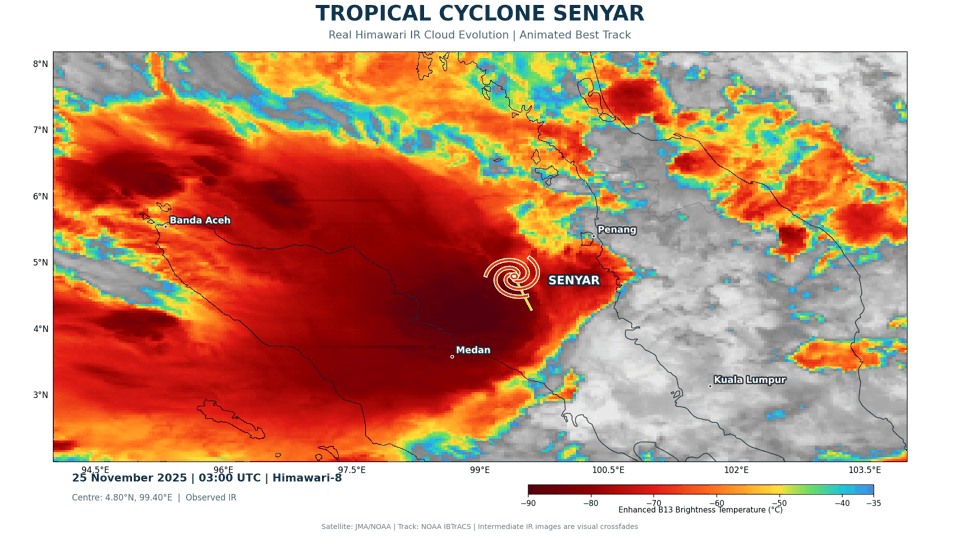
 CASE STUDY
Senyar 2025: tropical cyclogenesis near the equator
A research focus on vorticity dynamics, atmospheric moisture, and geographic modulation in the Malacca Strait.
Read scientific analysis ↗
Science-led insight into tropical weather, extreme events, and climate risk — connecting atmospheric evidence with decisions that matter.
Case-based interpretation combining satellite imagery, reanalysis, observations, and physical meteorology.
CASE STUDYA research focus on vorticity dynamics, atmospheric moisture, and geographic modulation in the Malacca Strait.
Read scientific analysis ↗A cautious GOES-19, NEXRAD and ADS-B reconstruction of the convective environment, without attributing accident cause.
Read aviation weather analysis ↗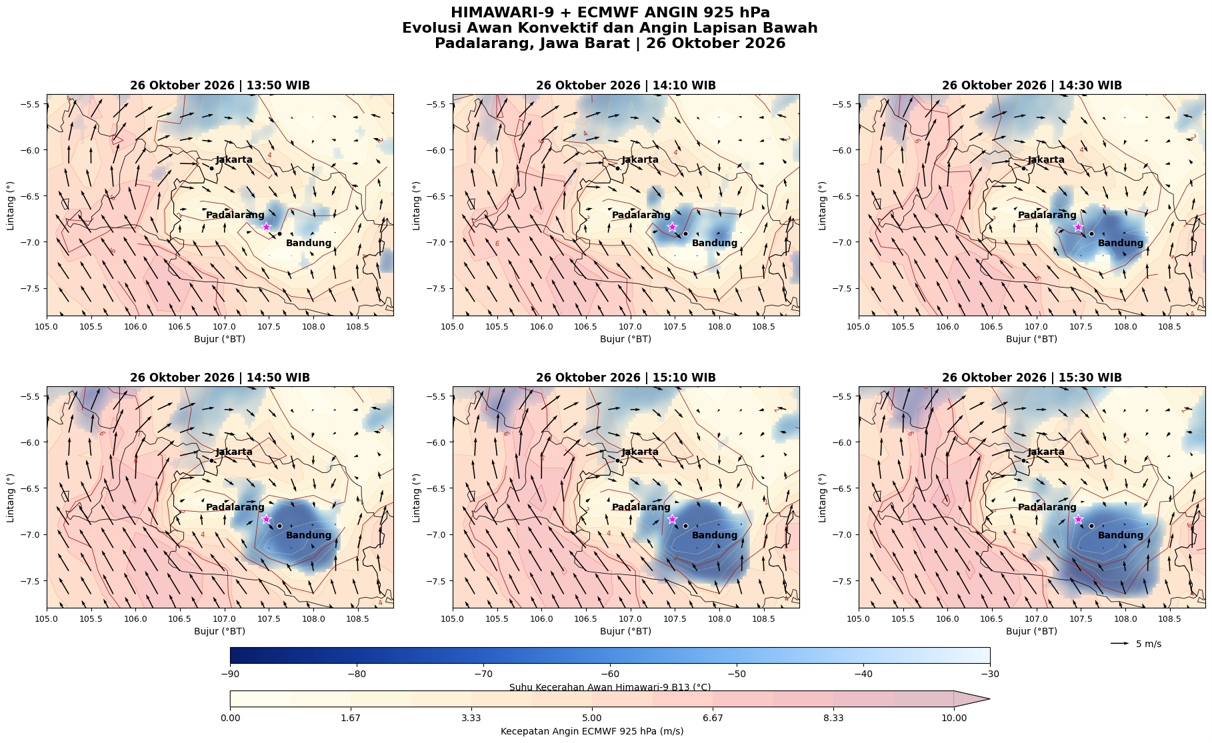 CASE STUDY
Himawari-9 and ECMWF analysis of a damaging wind event in West Java, with careful discussion of tornado verification.
Read convective weather analysis ↗Images and videos derive from observational or modeled data; interpretations are exploratory, not official weather warnings or accident findings.
Technical rigor combined with practical communication for research, media, and risk-informed decisions.
Himawari imagery, ERA5 circulation diagnostics, rainfall and moisture analysis.
Tropical cyclones, mesoscale convection, severe thunderstorms, and lightning.
Hydrometeorological hazards and weather-sensitive infrastructure assessments.
Technical reviews, science communication, and tailored meteorological workshops.
For editors, journalists, and producers seeking informed interpretation of tropical weather and severe atmospheric events. Interviews, context, and explanatory analysis are subject to availability and evidence.
Request expert commentaryTWI connects atmospheric analysis, scientific writing, and collaborative research. This section highlights selected technical assignments and research leadership experience. Research publications are intentionally not listed at this stage.
Discuss a collaboration ↗Tropical Weather Intelligence is being developed as an independent scientific communication and consultancy platform focused on the tropical atmosphere, extreme weather, and climate-related hazards. It aims to make complex analysis accessible without compromising scientific context.
TWI is independent and is not presented as an official agency forecasting or warning channel.
Selected professional projects and scientific work undertaken by TWI’s founder before the creation of the independent platform.
Research on meteorological hazards, vulnerability, and risk relevant to feasibility assessment of a proposed nuclear power plant near Gosong Beach. BRIN–LPDP supported.
Principal Investigator · West Kalimantan, 2022–2024Site meteorological data quality control, upper-air observation, hazard characterization, and technical assessment through projects involving Surveyor Indonesia, Renuko, and BATAN.
PI / Meteorological Aspect Leader · Bangka, Serpong and West KalimantanInterdisciplinary research on hydrometeorological risks and flood mitigation through river-basin management, supported by NERC, ESRC, Newton Fund, and Indonesian partners.
Co-Investigator · 2019–2021Projects involving upper-air data, radiosonde and GNSS radio occultation, atmospheric monitoring, and extreme-weather studies.
PI / Co-Investigator · 2021, 2023–2025Research experience involving cloud-to-ground lightning, precipitation relationships, storm evolution, and the use of lightning information in weather-hazard analysis.
Scientific research · IndonesiaExperience summaries are presented without confidential project documents, unverified budgets, or implied endorsement by past clients and institutions.
Bridging atmospheric research, operational meteorology, and science-based risk assessment to support informed decisions.
An Indonesian meteorologist and academic with over two decades of experience in operational weather forecasting, atmospheric dynamics, extreme weather, meteorological risk assessment, and applied scientific projects. He served as Director of the Indonesian State College of Meteorology, Climatology and Geophysics (STMKG) from 2024 to 2026, following earlier responsibilities in academic leadership, student affairs, and institutional cooperation.
His expertise spans tropical atmospheric dynamics, lightning physics and thunderstorm electrification, aviation meteorology, satellite and radar observations, numerical weather prediction, and hydrometeorological hazards.
As a Principal Investigator and Meteorological Aspect Leader, he has contributed to nuclear power plant site evaluation, meteorological safety studies, upper-air atmospheric monitoring, and environmental risk assessments through assignments involving Surveyor Indonesia, Renuko, BATAN, and BRIN-supported research.
His work also includes interdisciplinary flood-risk research in the Ciliwung basin and atmospheric monitoring using radiosonde and GNSS observations.
Through Tropical Weather Intelligence (TWI), he aims to advance independent scientific analysis, strengthen research collaboration, and communicate atmospheric evidence to support science, media, and society.
Professional affiliations are provided for biographical context and do not imply institutional endorsement of TWI.
TWI intends to invite relevant specialists in atmospheric science, climate, remote sensing, hydrometeorological hazards, and disaster risk to support future collaboration and scientific advice.
Membership will be published only after invitations are accepted and roles are agreed. No external appointments are claimed at this stage.
Published analyses should identify authors, publication dates, data sources, methods, limitations, and corrections when applicable.
Research previews and expert commentary are distinct from peer-reviewed journal articles and operational weather warnings.
Sponsored or commissioned work, where applicable, should be transparently disclosed and separated from independent editorial analysis.
Media enquiries, research partnerships, consulting and training opportunities.
For initial correspondence, use the TWI administrative Gmail. A domain-based email will be added after configuration.
Email TWI ↗